March And March: A breakdown of South Africa’s Anti-illegal Immigration protests this week

Image: Joseph Bracken
If you've been anywhere online in the past 72 hours, you've probably seen the words "March and March" trending and tried to figure out what exactly is going on. The movement has completely taken over conversations across South Africa and internationally, with thousands taking part in demonstrations and thousands more watching from the sidelines, trying to piece together what it all means and why it's suddenly everywhere.
March and March is a South African civic movement that says its mission is simple: to advocate for the enforcement of the country's immigration laws, particularly around undocumented foreign nationals. The movement argues that illegal immigration places additional pressure on public services, employment opportunities, housing, healthcare and national security.
Organisers have been clear that they're not opposed to legal immigration. They say they just want existing laws to actually be applied consistently, which feels like a reasonable ask on paper but has opened up a much messier conversation in practice. The movement declared 30 June a symbolic deadline for the government to act, which is why demonstrations broke out across several provinces. Authorities increased police visibility in key areas and appealed for protests to remain peaceful, while also warning that intimidation, violence and vigilantism wouldn't be tolerated. It's the kind of moment where the tension between constitutional rights and public safety plays out in real time, and everyone's watching to see which way it tips.
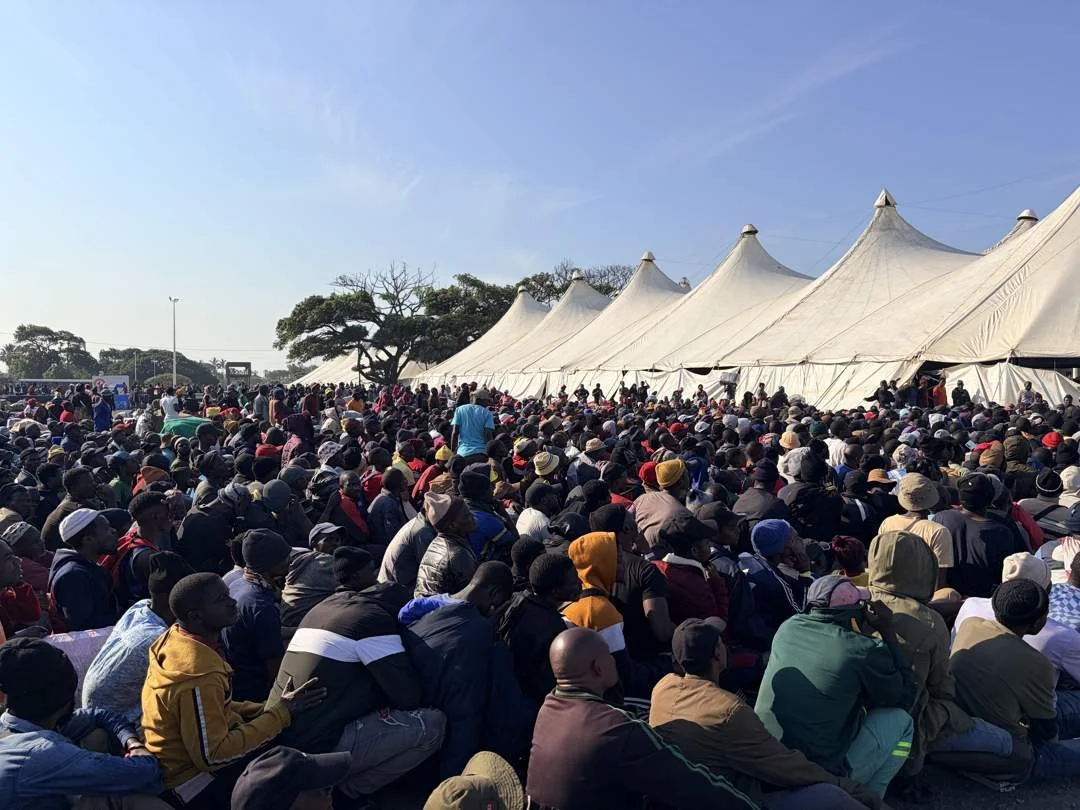
Malawian nationals gathered at a temporary repatriation site in Durban. Image: Bongekile Macupe
What makes this movement so complicated is that opinions on it are deeply divided and both sides feel like the other is missing the point entirely. Supporters believe South Africa should enforce its immigration laws more effectively, that undocumented immigration places strain on already stretched public resources, that the government needs to strengthen border management, and that citizens have every right to peacefully demand action from elected leaders. Critics argue that the movement's messaging can contribute to xenophobia and hostility towards foreign nationals, that legal migrants and refugees may become targets despite complying with South African law, that immigration enforcement should remain the responsibility of the state, not communities, and that broad anti-immigration rhetoric risks escalating tensions and violence in ways that are hard to walk back once unleashed.
The reason immigration has become such a major issue in South Africa right now is that it intersects with almost every ongoing challenge the country is facing. For many South Africans, undocumented immigration feels like it contributes directly to issues like high unemployment rates, pressure on public healthcare and education, housing shortages, border management, and crime and safety. But economists and policy experts often point out that the country's challenges are complex and can't be attributed to a single factor, which is the kind of nuanced take that doesn't always survive on social media.