Designer Going Out of Fashion? The Rise of the Jelly Firkin and Counter Cult(ure)s.
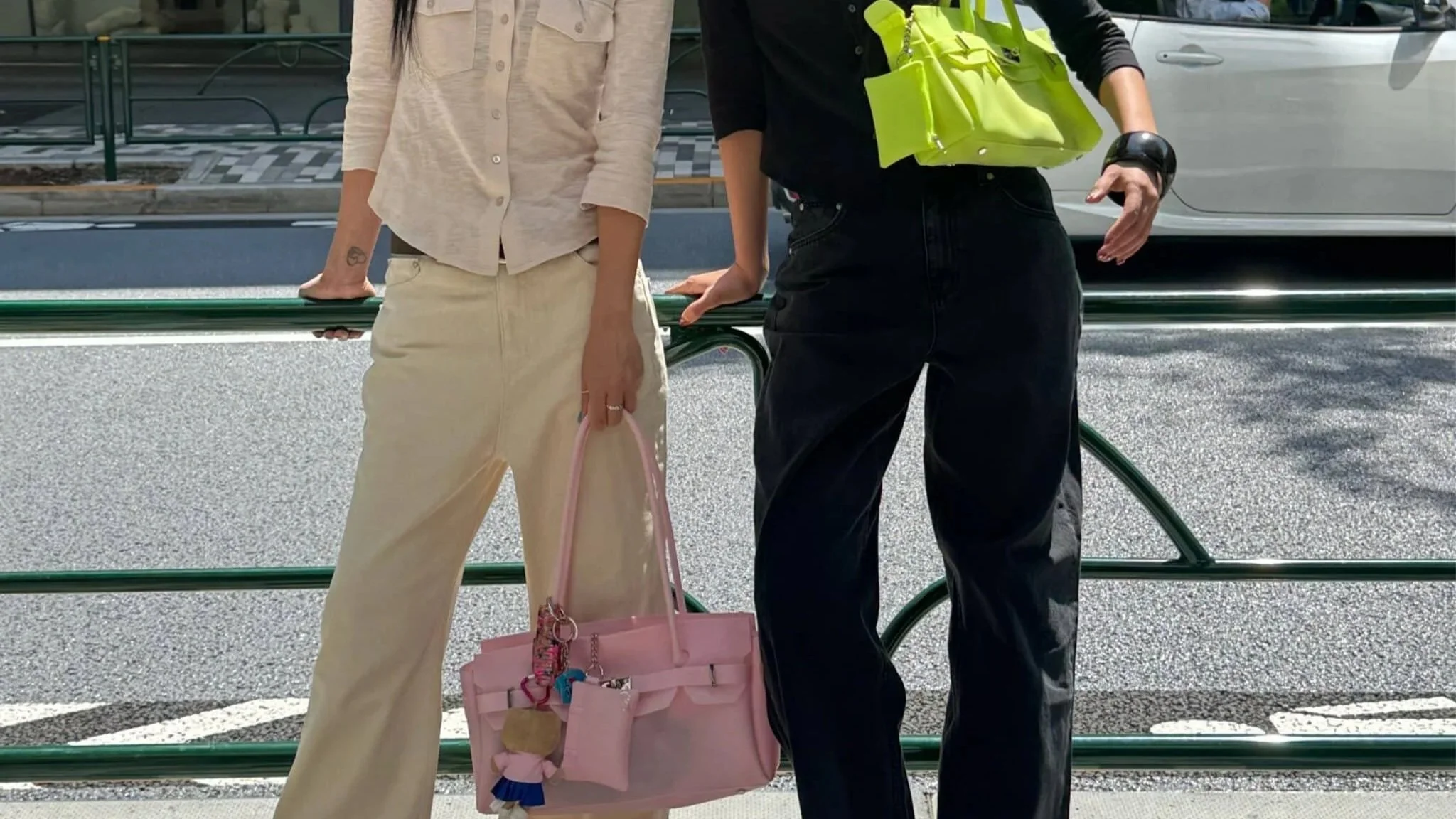
Image: Instagram @deinet_official
If it’s true that the Devil wears Prada, then cult leaders surely wear Hermès. The Luxury Pop (TLP), an online platform based in India, noted that there is a required strategy when purchasing a Birkin bag. Acquiring a Birkin isn’t as easy as walking into Hermès and simply purchasing one. In fact, they “wish it were that easy!” The process has been described as “more like a game,” with TLP stating that inside Hermès, one can expect to find the store models of the bags, unaccompanied by prices on the shelves. Already, the scene being set is one of exclusivity and unattainability. They state that before buying a Birkin, you need to build a relationship with your sales associate, and that “you need to start buying things that show your love for the brand.”
To purchase a Birkin, it is imperative that you display customer loyalty and brand devotion by either purchasing other Hermès items at the store or by wearing Hermès while you shop, they add. TLP further states that key to the process is to consistently buy from the brand and show your love in a consistent manner. Hermès will then, based on your purchases, generate a profile of you which TLP advises may be enhanced through going “all out in one go” by purchasing “something really rare and expensive from the brand.” According to TLP, this subsequently makes your profile look really exclusive. They further note that upon performing all the aforementioned rituals, Hermès might offer you a Birkin. In essence, it’s all about impressing your sales associate.
Established in 1837, Hermès promises to remain “faithful to its artisanal model” and to “human values.” They explain that “the constant quest for beautiful materials” is a philosophy that contributes to the brand’s uniqueness, the Kool-Aid which no doubt anyone wishing to purchase a Birkin is expected to drink. Of course, what is a brand without a devoted cult following? Hermès states that their customers are “a true community” which “transcends borders.”
Hermès also notes that their products are designed specifically to accompany changing lifestyles. One has to wonder whether this applies to the many lifestyles affected by economic fluctuations, the volatility of employment, and unsteady streams of income — all tenets of modern reality. For a long time, the dream of owning a Birkin remained a pipe dream for many; others, however, are acquiring their Birkins through any means necessary. Here, I introduce to you the Firkin and the Jelly Firkin, knock-off Hermès bags fashioned in the image of the original Birkin.
The Birkin, brainchild of Executive Chairman of Hermès (1978-2006) Jean-Louis Dumas, was initially designed in 1984 with late, acclaimed British actress Jane Birkin in mind. The Birkin bag was originally designed as the stylish and capacious answer to the dilemmas of motherhood. Jane Birkin, famously known for using a straw basket as a handbag, found that it offered little security to her essentials and to her baby’s necessities. One chance encounter with Dumas on a flight and a rough sketch later, Jane Birkin inherited the very first prototype of The Birkin bag.
Clearly, the process of acquiring a Birkin bag is one earmarked almost entirely by exclusivity and elitism. Assistant Professor of Philosophy at Widener University Joseph Metz states that sociological literature has long since defined cults as “high-control groups,” requiring closed-off, hierarchical structure, a high level of commitment from most members and “some methods of control and enforcement of group rules.” Metz further details that there is often a culture of surveillance within cults, whereby members are expected to uphold strict compliance with the rules of the group. This surveillance, Metz says, allows the cult to “weed out less-dedicated members”, ultimately “leaving the remaining members feeling even more committed and even more social pressure to remain.”
Sounding familiar? Hermès demands an almost sycophantic level of loyalty from their buyers, expecting consistent patronage and a public display of affection for the brand, the same high level of commitment expected by leaders of a cult. The strategy required to even buy a Birkin reproduces the highly-controlled, closed-off, hierarchical structure of a cult, as introduced by Metz. First rule of Hermès? Don’t talk about how to buy a Birkin. Second rule of Hermès? Don’t talk about how to buy a Birkin.
Because of the instability of contemporary economies, the prospect of acquiring a Birkin has become increasingly more elusive for ordinary people. As these economies continue to be shaped by global unrest, inequality, and war, the desire for designer is waning, with many people turning to thrift stores and second-hand vintage for pre-loved luxury. One such example can be located in the proliferation of overseas markets with bootleg goods such as the Firkin or the Jelly Firkin. These counterfeit bags are being mass-produced to address the mounting desire for status and style without channelling the elitism of Hermès. The counter-culture of the Firkin and the Jelly Firkin has made it so that high fashion and luxury no longer remain positioned to the top 1%.
These bags allow for opulence to become approachable and for couture to feel more like culture. Lenka from Fashion Rookie Bootcamp attributes the popularity of the Jelly Firkin to its nostalgic, playful, Y2K look; the bag’s translucent canvas and metal hardware being optimal for customisation and personalisation in the form of charms and accessories; and the bag’s bold rejection of the minimalist beige, quiet luxury aesthetic through the bag being available in bright, powdery shades. Lenka notes that the rise of the Jelly Firkin signals how fashion is steadily headed “away from taking luxury seriously and towards making fashion fun again.”