Dreaming Beyond the Surface: Inside Numen of Story Issue 2, Àlá
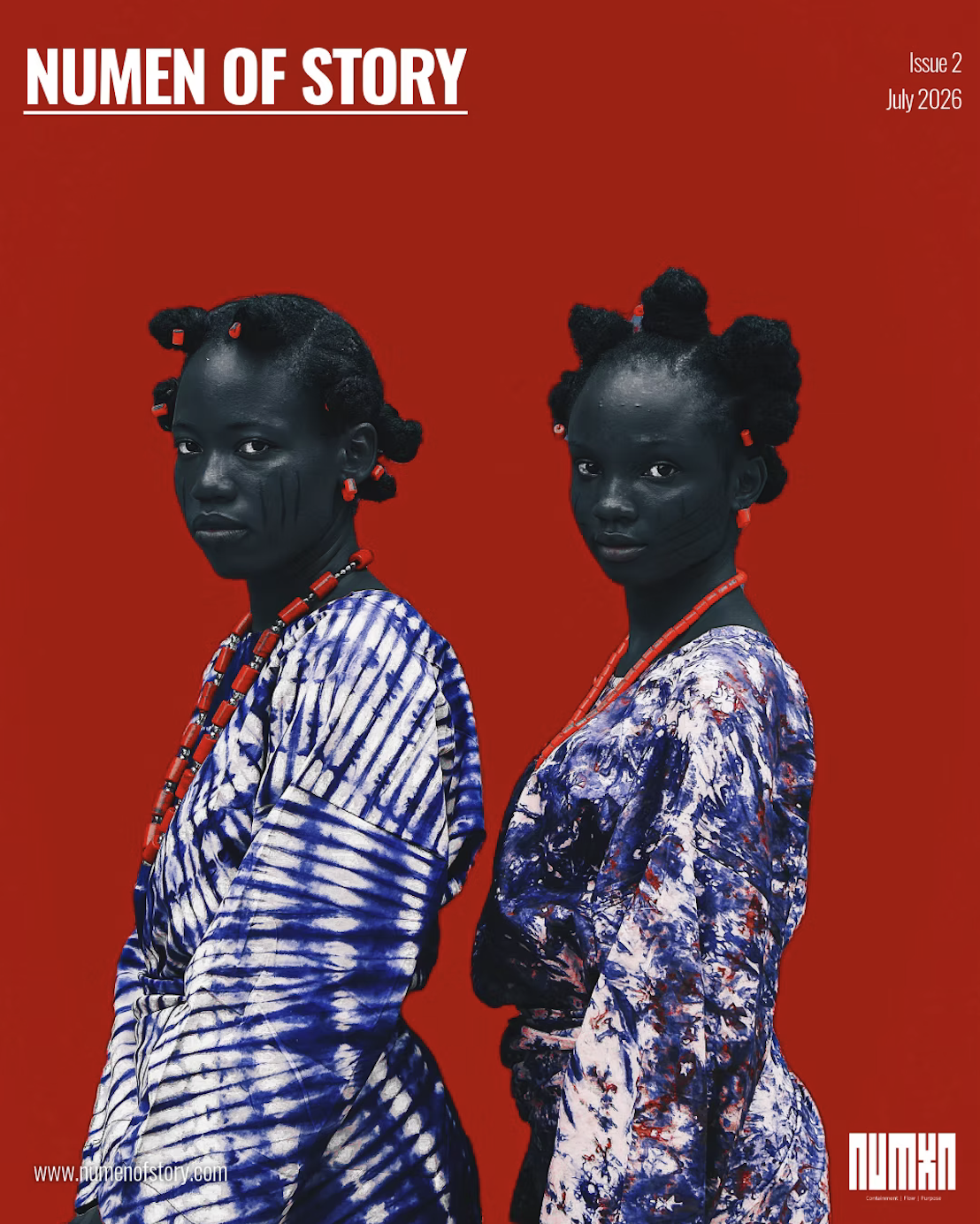
Image: David Umeora
Some publications document creative work. Others create a space where ideas, emotions and histories can meet in conversation. Numen of Story belongs firmly in the latter category. With the release of Issue 2, Àlá, the multidisciplinary journal deepens its commitment to showcasing African storytelling that is both artistically ambitious and intellectually engaging.
Named after the Yorùbá word for ‘dream,’ Àlá invites readers into a world where reality and imagination exist side by side. Dreams, however, are not presented simply as moments of escape. Instead, they become a lens through which artists examine memory, identity, faith, labour, intimacy, violence and belonging. The result is an issue that feels both deeply personal and unmistakably collective, asking readers to linger with questions rather than search for simple answers.
From its opening pages, Àlá establishes itself as more than a literary journal. It is a carefully curated gathering of photography, painting, poetry, fiction and visual storytelling that demonstrates the power of multidisciplinary art to illuminate the complexities of contemporary African life. Each work contributes to a larger conversation while maintaining its own distinct voice, creating an experience that rewards both quiet reflection and repeated reading.
One of the issue’s greatest strengths lies in its refusal to reduce African experience to familiar narratives. Rather than presenting a single perspective, Àlá embraces contradiction and multiplicity. The worlds contained within its pages move between the surreal and the everyday, the intimate and the political, the remembered and the imagined. These shifts allow the issue to capture the richness of lived experience without forcing it into comfortable categories.
Throughout the collection, recurring themes emerge with remarkable clarity. Labour appears not merely as economic necessity but as a human condition shaped by dignity, sacrifice and survival. The body becomes a powerful site of memory and transformation, carrying the weight of history while remaining capable of renewal. Home is explored not only as a physical place but as an emotional landscape shaped by longing, displacement and togetherness. Faith and ritual are revisited with curiosity, revealing traditions that continue to evolve across generations.
What makes these explorations particularly compelling is the editorial restraint with which they are presented. The works are allowed to speak for themselves, resisting the temptation to explain or resolve every tension. Silence is given as much significance as speech, and ambiguity becomes an invitation rather than an obstacle. In doing so, the issue trusts its audience to engage thoughtfully with difficult questions and layered meanings.

The visual works are especially effective in extending the journal’s central theme. Photography and painting do not merely illustrate accompanying texts but function as narratives in their own right. Landscapes reveal the traces of extraction and environmental change, while portraits capture moments of vulnerability, resilience and quiet contemplation. Together, these images broaden the emotional vocabulary of the issue, reminding readers that stories can be told as powerfully through composition, texture and light as through language.
Equally noteworthy is the issue’s editorial curation. The sequencing of works creates a rhythm that allows conversations to emerge across genres and mediums. Poems echo photographic motifs. Fiction resonates with visual art. Rather than existing as isolated contributions, the pieces collectively form an intricate tapestry of voices that continually respond to one another.
There is also a welcome sense of courage running through Àlá.
The issue does not seek to make difficult subjects more palatable or simplify complex realities for easy consumption. Instead, it acknowledges discomfort as an essential part of meaningful artistic engagement. Themes of inherited silence, desire and transformation are approached with honesty and nuance, allowing each contributor to retain the integrity of their perspective. In doing so, the journal creates space for conversations that are often overlooked or left unresolved.
Yet Àlá is not defined solely by its willingness to confront challenging realities. It is equally a celebration of imagination. Dreams become acts of possibility, offering ways to rethink identity, recover forgotten histories and envision new futures. Even amid uncertainty, the issue remains attentive to beauty, tenderness and moments of quiet connection. This balance between confrontation and hope gives the collection its emotional depth.
As an independent publication, Numen of Story continues to demonstrate the vital role literary and arts journals play within the contemporary African creative landscape. By bringing together emerging and established voices across multiple disciplines, it creates opportunities for experimentation and dialogue that extend beyond conventional publishing boundaries. In an era where storytelling increasingly moves across text, image and digital media, the journal embraces this fluidity without losing sight of the careful editorial vision that binds each issue together.
With Àlá, Numen of Story confirms that its mission extends beyond publishing exceptional creative work. It is cultivating a living archive of African artistic expression, one that values complexity over certainty, multiplicity over singular narratives and curiosity over easy conclusions.
Issue 2 is a thoughtful, beautifully curated collection that rewards attentive reading. It asks its audience to slow down, to sit with uncertainty and to recognise that some of the most meaningful truths emerge not in moments of clarity but in the spaces between dreaming and waking. It is an invitation to see differently, remember differently and imagine differently.
In a publishing landscape that often rewards immediacy, Àlá reminds us of the enduring value of art that lingers long after the final page has been turned. It is a compelling testament to the power of African storytelling in all its forms, and a confident step forward for Numen of Story as it continues to establish itself as an important voice in contemporary literary and visual culture.