If It’s Not Posted, Did It Even Happen?
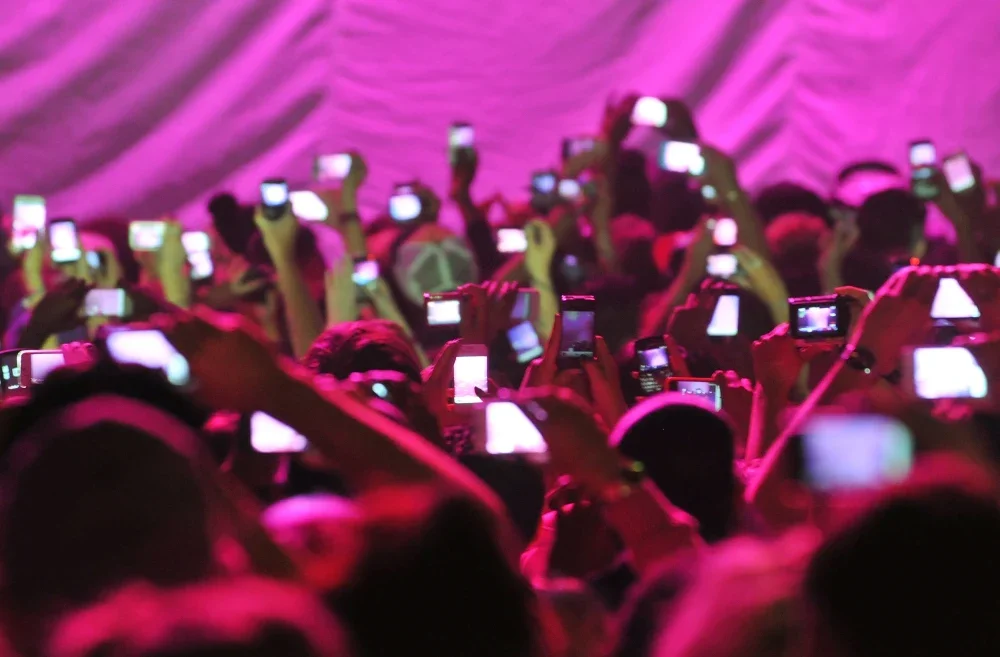
Image: Jim Dyson
Picture this: you’re at a party, the music is pumping, and the vibe feels perfect. Then, from a distance, someone says, “Wait, don’t start yet, I still need to record!” and tries to imitate the moment. Phones come out, angles are checked, lighting is adjusted, and what was once spontaneous and unintentional becomes staged and fabricated. When it finally makes its way to TikTok or Instagram, the question lingers quietly in the background: if it wasn’t captured, would it even matter?
Social media platforms like Instagram and TikTok have transformed everyday life into something performative. A night out with friends, a casual lunch date, or even a gym session (I’m guilty of all three charges, Your Honour). Everything is potential content nowadays. There’s an unspoken understanding: if it looks good, it belongs online. This not only changes what people post but also how they behave in real time, and the question shifts from “Did I enjoy this?” to “Did this look good enough to post?”
Behind the posts is a quieter pressure: the need to be seen. In a world where attention is currency, being seen can feel just as important as being present in the moment. Likes, comments, and views are not just numbers, but a new form of validation. Among students and young creatives, there is a growing expectation to maintain an online presence and, over time, that constant need to show up online can become exhausting.
The real problem, I believe, isn’t necessarily posting, but constant curation. What shows up online is often a highlight reel: the best angles, the craziest outfits (some outfits make us look like cartoon villains, honestly), and the best moments. Over time, this creates a distorted reality where everyone else seems to be living more exciting, polished lives. Ironically, in trying to capture everything, something gets lost: presence.
A study by SocialPlug found that South Africa’s population is among the most chronically online, with more than 75% of the population being regular internet users with an average screen time of 9 hours and 37 minutes. Some observations I’ve made around myself are how even something like a workout turns into a Christopher Nolan film. I was at Virgin Active recently and accidentally walked across a lady who was filming her workout. Although my photobomb was unintentional, it made me question how effective the workout would be with all the pauses and retakes she did between sets. Not being hypocritical, I had also taken a video of my workout (in my defence, it was only one). Still, it made me realise how I was affected by the very same culture I was critiquing, especially when I kept on checking if my crush had seen it.
There is a quiet shift happening among some young people who are choosing to be intentional and put the phone down to experience moments without the pressure to document them. The truth is that some of the best moments aren’t necessarily aesthetically pleasing, but messy, spontaneous, and impossible to frame perfectly — and maybe that’s the point. Not every memory needs an audience. So, did it really happen if it was not posted? Yes! But in a world where visibility often feels like proof, remembering that isn’t always easy. Because at the end of the day, real life is far from a filter and it’s not always well-lit, perfectly timed, or captured in 15 seconds. Some of the most meaningful experiences happen quietly, like the small conversations with friends, the uncontrollable laughs with comedic cousins, and moments like that normally don’t translate well on screen.
Maybe the real question is not whether it happened, but who it happened for. Was it for you or for the online version of you, waiting to be approved? Maybe the most real moments are the ones no algorithm gets to see.