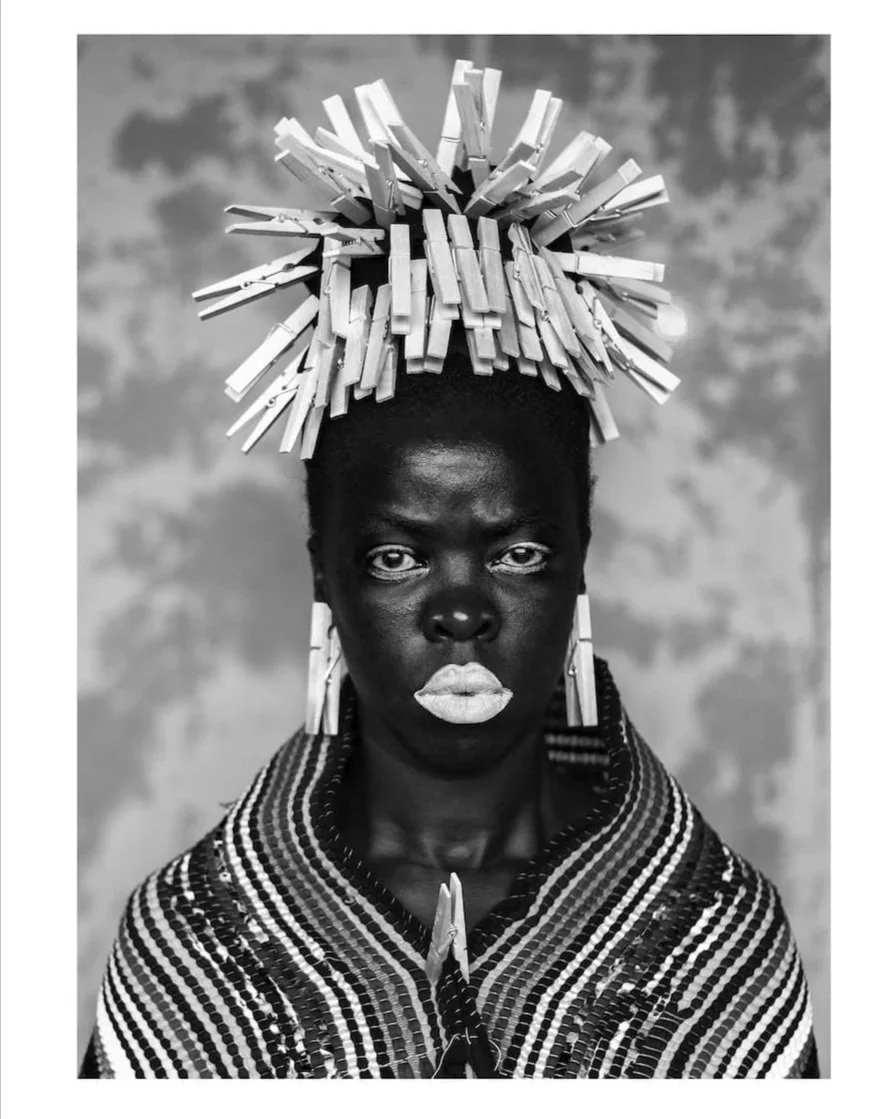
Zanele Muholi. Bester I, Mayotte, (2015) Image: AP
The pegs are the first thing that catches your eye. There are a lot of them, gathered around Zanele Muholi’s head and across their eyes and chest. You’d recognise them from washing lines, laundry baskets and hot afternoons spent hanging clothes out to dry. Here, they present a crown.
Then you meet Muholi’s eyes.
In Bester I, Mayotte (2015), the South African photographer and visual activist Zanele Muholi faces the camera directly. Their gaze holds yours, which becomes difficult to remain as a casual observer. You came to look at a photograph; now you feel that something is being asked of you.
Perhaps it is simply this: look properly. A mother’s story lies in those pegs. The work’s title honours Bester, Muholi’s mother, who worked as a domestic worker. That connection changes the portrait. What initially appears to be a creative arrangement of household objects begins to carry the weight of someone’s working life. Think of what the pegs represent: washing complete, clothes lifted and tied, laundry collected, and another task waiting. Such work maintains a household and keeps it running, yet the person doing it may receive far less attention than the comfort their labour provides.
Muholi places their tools where they command attention. The pegs frame the face like an elaborate headdress, lending a ceremonial quality to objects associated with routine chores. Read as a tribute to Bester, the portrait gives domestic labour a dignity that its social status has often denied it. It also introduces a wider reflection on South Africa, where the histories of domestic service, gender, and racial identity are closely related.
The photograph belongs to the series Somnyama Ngonyama, which translates to ‘Hail the Dark Lioness.’ Muholi uses their body, lighting and familiar objects to analyse Blackness and identity. In Bester I, those elements become intimate. A family history written into the image through objects that many viewers have handled without giving them much thought. The ability to make the familiar feel newly significant also shapes Muholi’s previous work Izidwedwe, part of Insila Yomuntu (after Pistoletto) (2010). Here, discarded clothing becomes the material through which questions of beauty and value emerge.
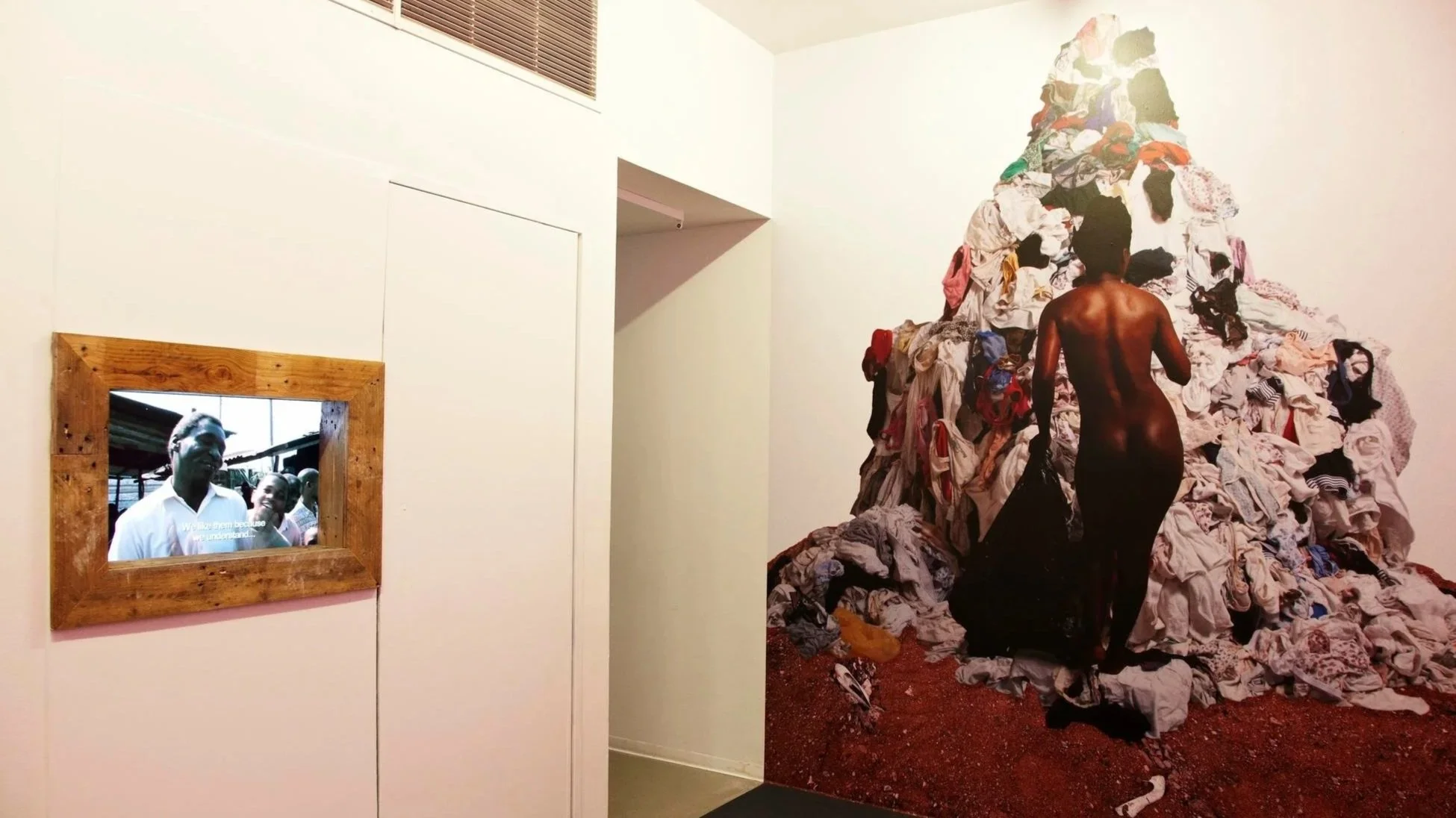
Zanele Muholi, Izidwedwe, as part of Insila Yomuntu (after Pistoletto) (2010). Image: New Museum Digital Archive
The work responds to Michelangelo Pistoletto’s Venus of the Rags, which centres a classical female figure beside a heap of clothes. The arrangement creates a complex encounter between an idealised body and things that have been placed aside. One is offered for admiration; the others suggest use, wear and disposal. Muholi brings their own Black body into that conversation.
The shift persuades us to study the standards we allow to an artwork before we can even begin to interpret it. Which bodies have we learned to associate with beauty? Which images seem to belong in a gallery? Who established those expectations? By participating in the construction of their own image, Muholi claims a say in how their body is presented and understood. That act carries particular force against histories in which Black people have been depicted through other people’s assumptions, desires and prejudices. It also connects these works to Muholi’s wider commitment to the visibility of Black LGBTQIA+ lives. Being photographed can create a record of someone’s existence. Having control over that representation allows a person to shape what the record says.
For both artworks, gender, race, sexuality and class meet in detail. The pegs in Bester I connect a mother’s labour to a larger social history. The discarded clothes in Izidwedwe raise questions about “what” and “whom” we consider valuable. Muholi gives those questions a face, a body and a gaze that the viewer must encounter. Return to Bester I, and the pegs may no longer be the first thing you notice. You may see the tribute before the ornament, the working life behind the household object. But Muholi’s are still there, holding your attention. What has changed is what you see around them.