Stage Fight by Zita Oranje Review: Performing the Body Between Tension and Tenderness
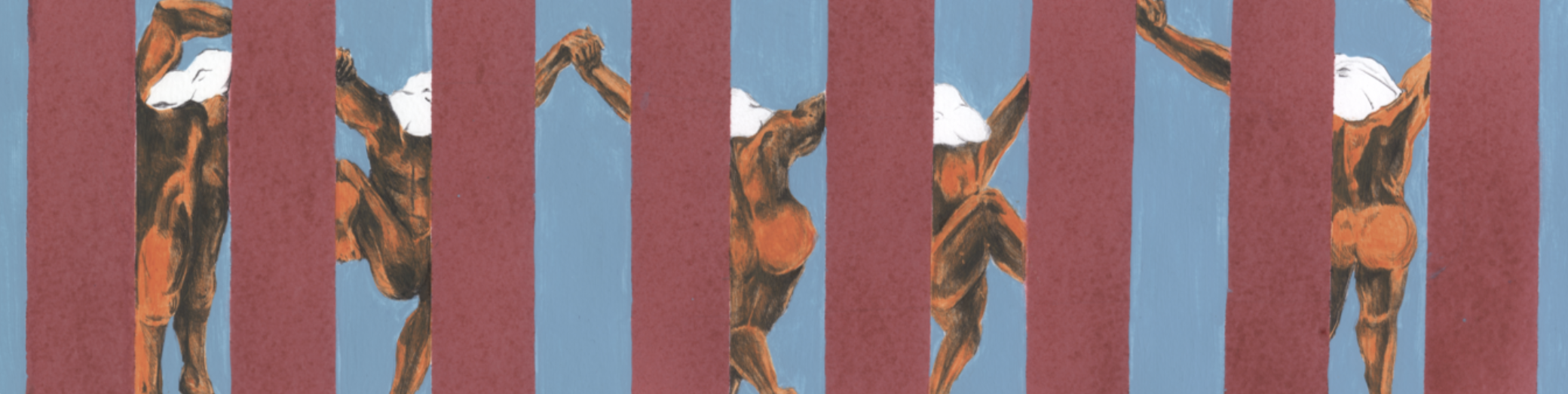
Image: Zita Oranje
Stage Fight, the latest exhibition by Zita Oranje, unfolds at the University of Pretoria’s 2-1 Gallery as a quietly charged meditation on the body in performance, on what it means to act, to hesitate, to struggle and to connect without ever speaking.
Running from 10 April to 1 May 2026, the exhibition draws viewers into a sequence of staged encounters where meaning is carried not through language, but through gesture, posture and the subtle tensions of physical form.
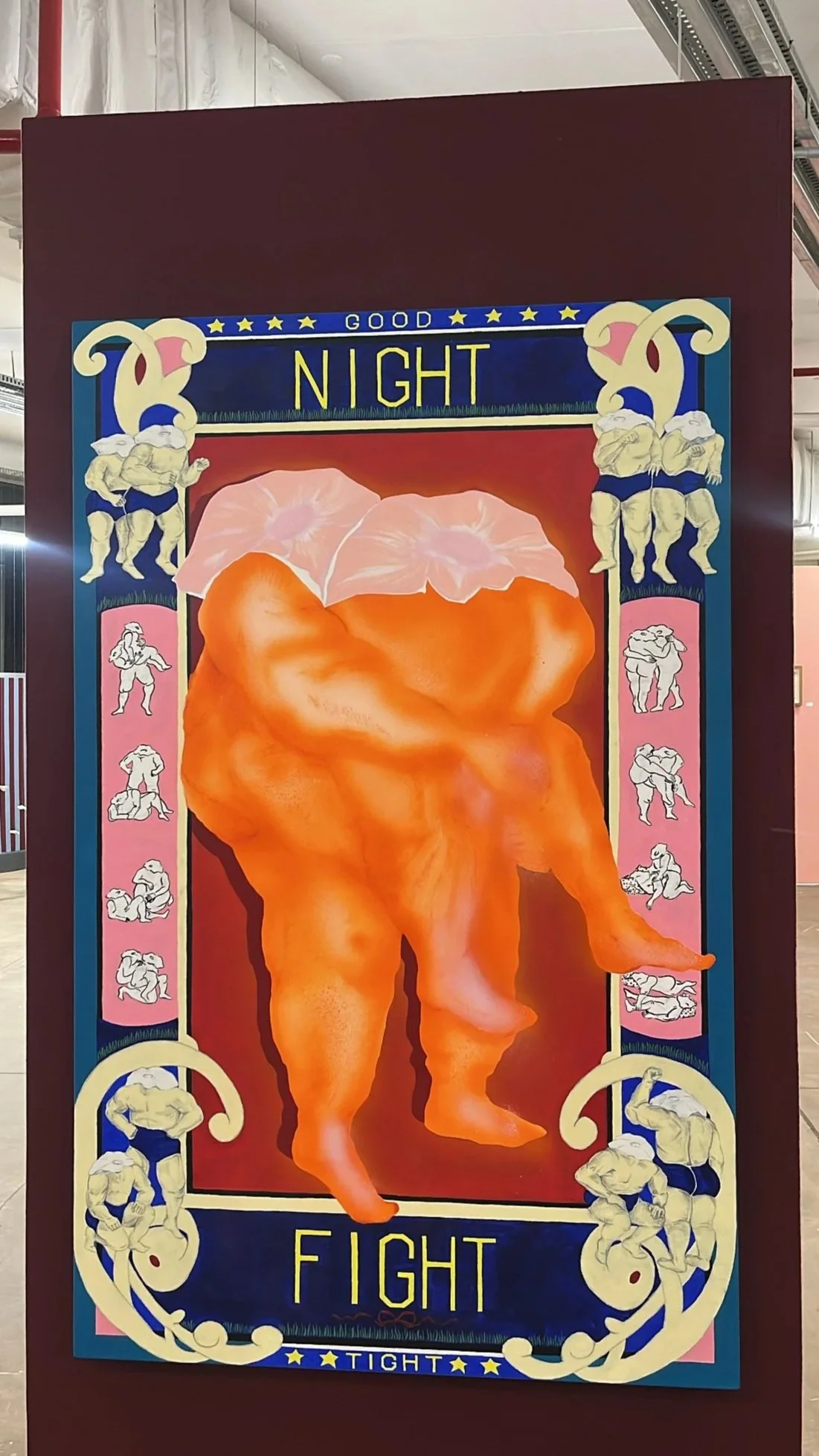
At the heart of Stage Fight are headless, costumed figures, ambiguous presences that seem to hover between character and body, between fiction and lived experience. Their anonymity resists fixed identity, shifting attention instead to the expressive capacity of movement. Limbs fold, torsos lean, bodies press and pull against one another in ways that suggest both conflict and care. These are not static images but moments caught mid-action, as if part of an ongoing rehearsal where gestures are repeated, adjusted and reimagined. The absence of faces removes the possibility of direct emotional cues, compelling the viewer to read these encounters through posture and surface, through the weight of a shoulder or the curve of a back. What emerges is a language of the body that feels at once intimate and unresolved.
The exhibition plays on the notion of “stage fright,” but rather than focusing on the anxiety of speech, it redirects attention to the body as the primary site of expression. Here, performance is not about delivering lines but about inhabiting a physical state, one that is uncertain, vulnerable and constantly shifting. The figures appear supple and unstable, their forms blurring as if in motion, caught between moments of resistance and surrender. They struggle and embrace in equal measure, and it becomes difficult to distinguish where one action ends and another begins. This ambiguity is central to the work, allowing each interaction to remain open, suspended between tenderness and tension.
As viewers move through the exhibition, they encounter three distinct spatial registers: foyer, stage, and dressing room, each offering a different iteration of these enigmatic figures. In the foyer, the characters appear as full, orange-costumed forms, their presence bold yet strangely detached, like performers awaiting their cue. Entering the stage space, the palette shifts dramatically to black and white, situating the figures within a more observational setting. Here, the dynamic subtly changes: the audience is no longer just the viewer but seems to include the figures themselves, as if they are watching one another perform.
This reflexive layering complicates the act of looking, turning the gallery into a site of mutual observation.
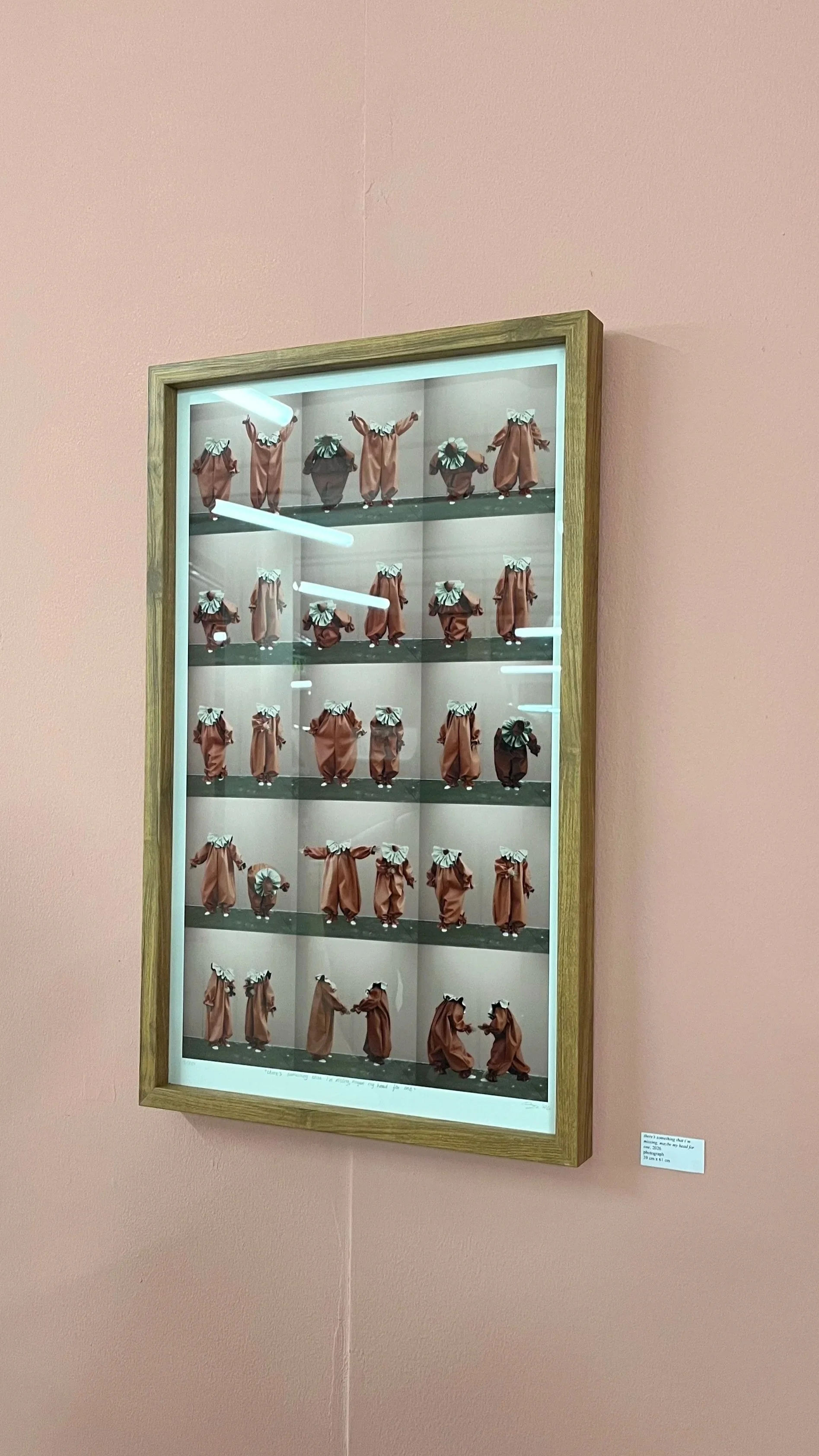
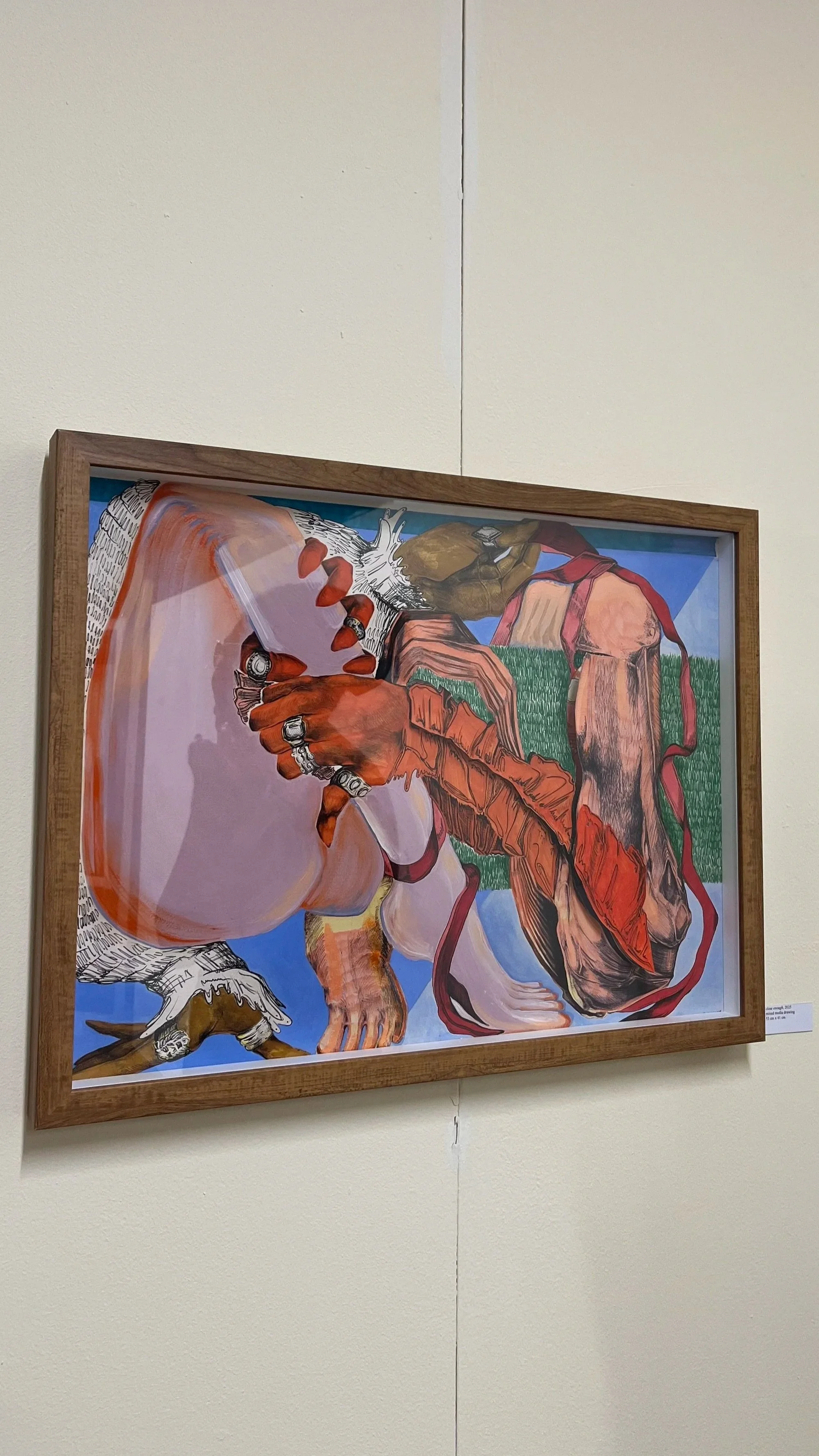
In the dressing room, the forms begin to unravel. The bodies loosen into amorphous, fabric-like states, resembling scraps or remnants rather than fully realised figures. These works suggest the quieter, often unseen moments that frame performance, the preparation before stepping into character or the release that follows. There is a sense of intimacy here, but also of fragmentation, as if the solidity of the staged body cannot be sustained indefinitely. The transition across these spaces reveals staging not as a fixed condition but as a fluid process, one that shapes and reshapes interaction depending on context.
Throughout Stage Fight, Oranje resists the pull of narrative closure. Instead of presenting a clear storyline, the exhibition operates more like a series of rehearsals, where actions are tried out, repeated and altered. This sense of ongoing performance invites viewers to engage actively with the work, to interpret and reinterpret the relationships unfolding before them. Meaning is never singular or stable; it emerges through the interplay of bodies, spaces, and the viewer’s own perceptions.
In this way, Stage Fight becomes less about spectacle and more about the fragile mechanics of interaction, how bodies communicate, how roles are assumed and discarded and how meaning is constructed through repetition and change. It is an exhibition that lingers in its ambiguity, offering no definitive answers but instead opening up a space for reflection on the complexities of presence, performance and the unspoken language of the body.