ditšwatšhemong by cow mash review: Cultivating Memory, Land and Future Worlds
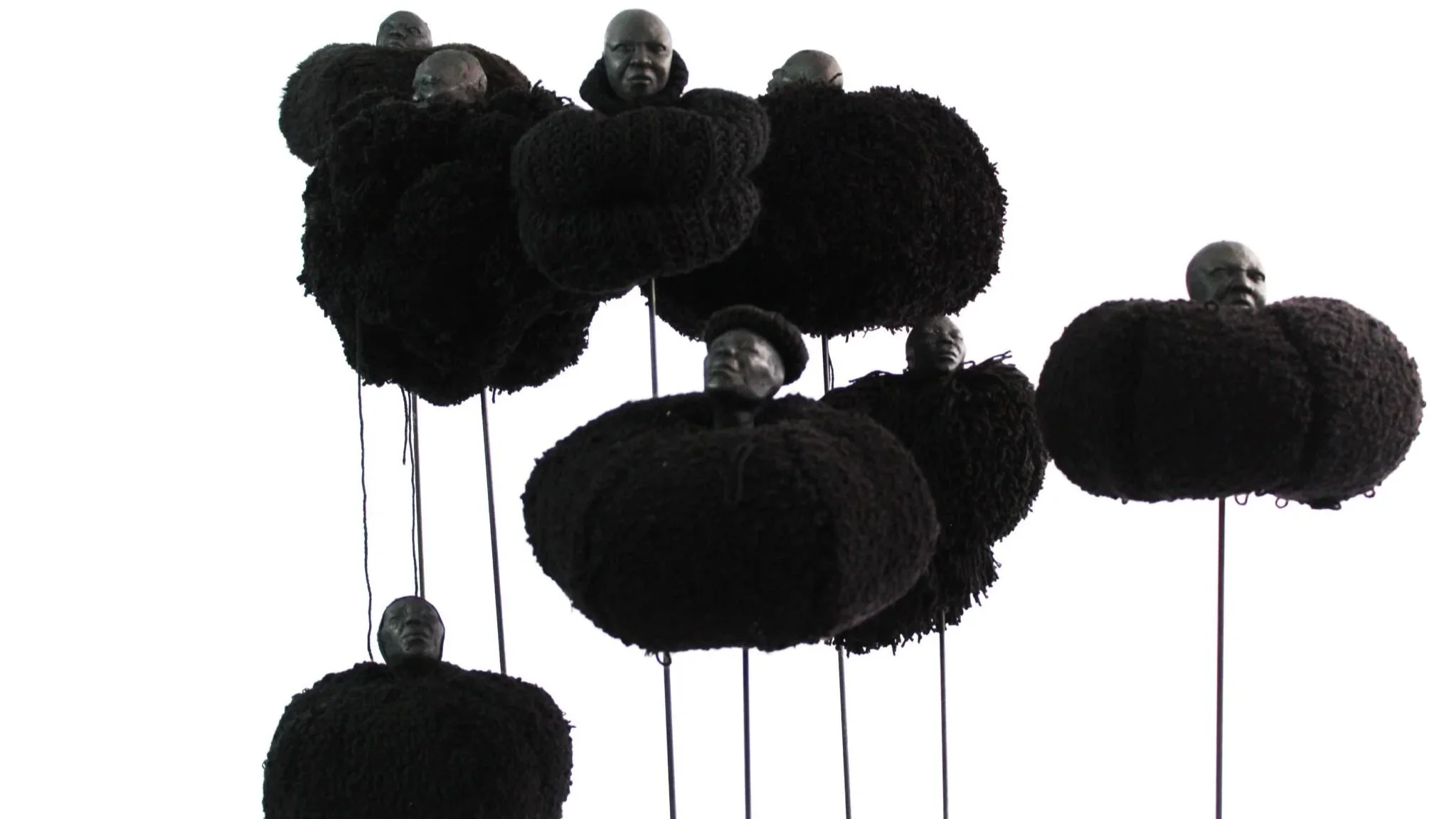
Image: Cow Mash
At the Javett Art Centre, ditšwatšhemong by Cow Mash unfolds as an immersive meditation on origin, belonging and the layered meanings of land. Translating loosely as “they come from the field,” the title holds within it a dual sense of place and ancestry, of land not only as physical terrain, but as a repository of memory, knowledge and spiritual inheritance. In Mash’s hands, this idea expands into a speculative and deeply personal landscape where past, present and future exist in continuous dialogue.
The exhibition moves fluidly between the material and the metaphysical, grounding itself in indigenous knowledge systems while imagining worlds still to come. It begins with masekitlana, an indigenous storytelling game, positioning play as both a pedagogical tool and a method of remembering. This opening gesture establishes the tone of the exhibition as intergenerational, an environment where knowledge is not fixed or didactic, but shared, performed, and reinterpreted across time. The journey concludes with a familiar nursery song reworked through Sepedi vowels, a subtle yet powerful act of linguistic reclamation that reframes the familiar through a culturally rooted lens.
Upon entering, viewers are met with a reimagined street-language environment that evokes the textures of everyday life, informal structures, improvised systems and the quiet resilience embedded within them. This threshold space acts as both an entry point and a grounding device, situating the exhibition within lived realities before gradually transitioning into more speculative terrain. Beyond the glass doors, the atmosphere shifts. The gallery opens into an exploratory landscape populated by unidentified seedlings, carefully preserved in glass vessels and tended to by the Balemi or farmers. These figures, whether literal or symbolic, suggest acts of care, cultivation and responsibility, reinforcing the exhibition’s central concern with nurturing both land and knowledge.
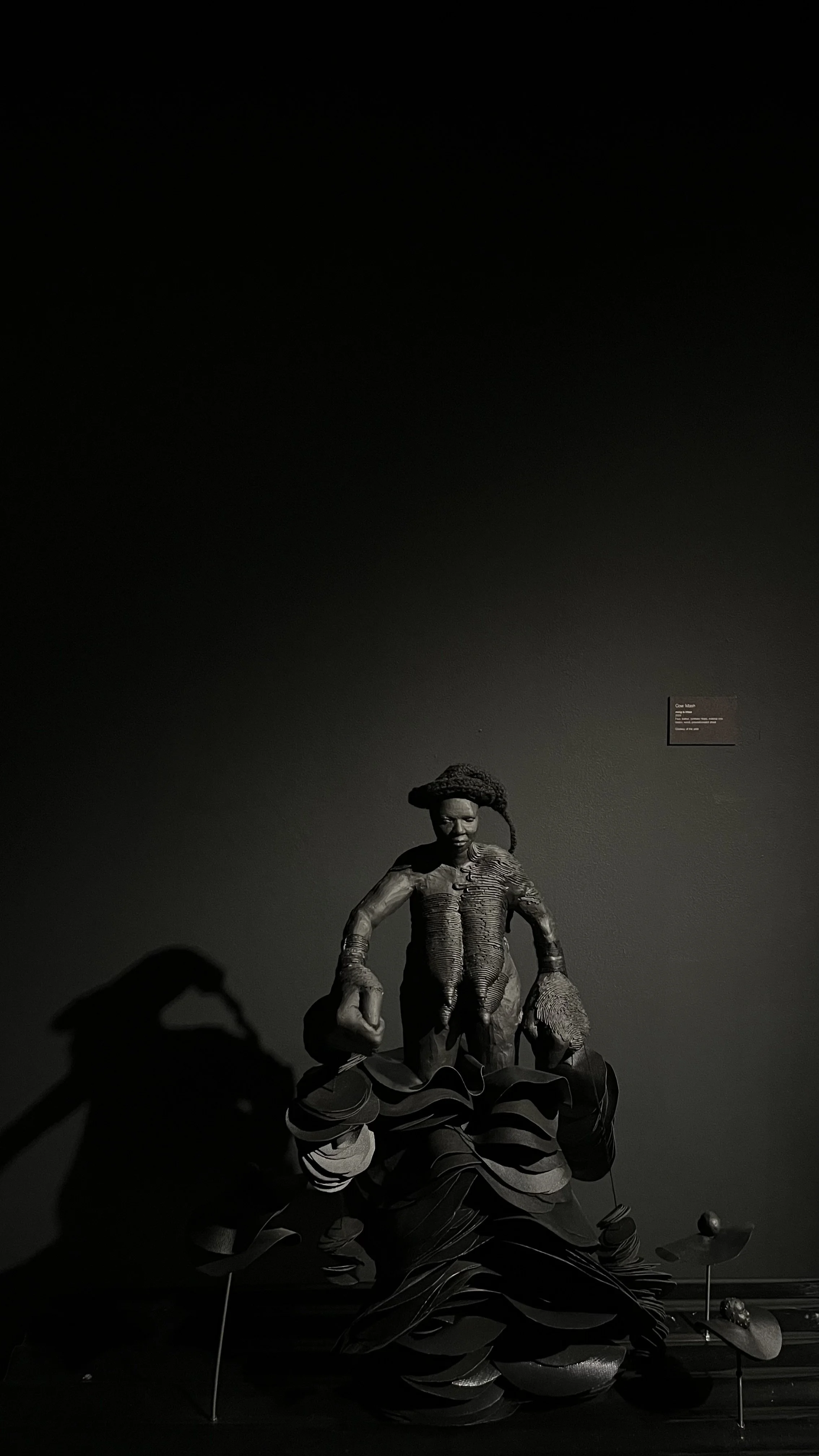
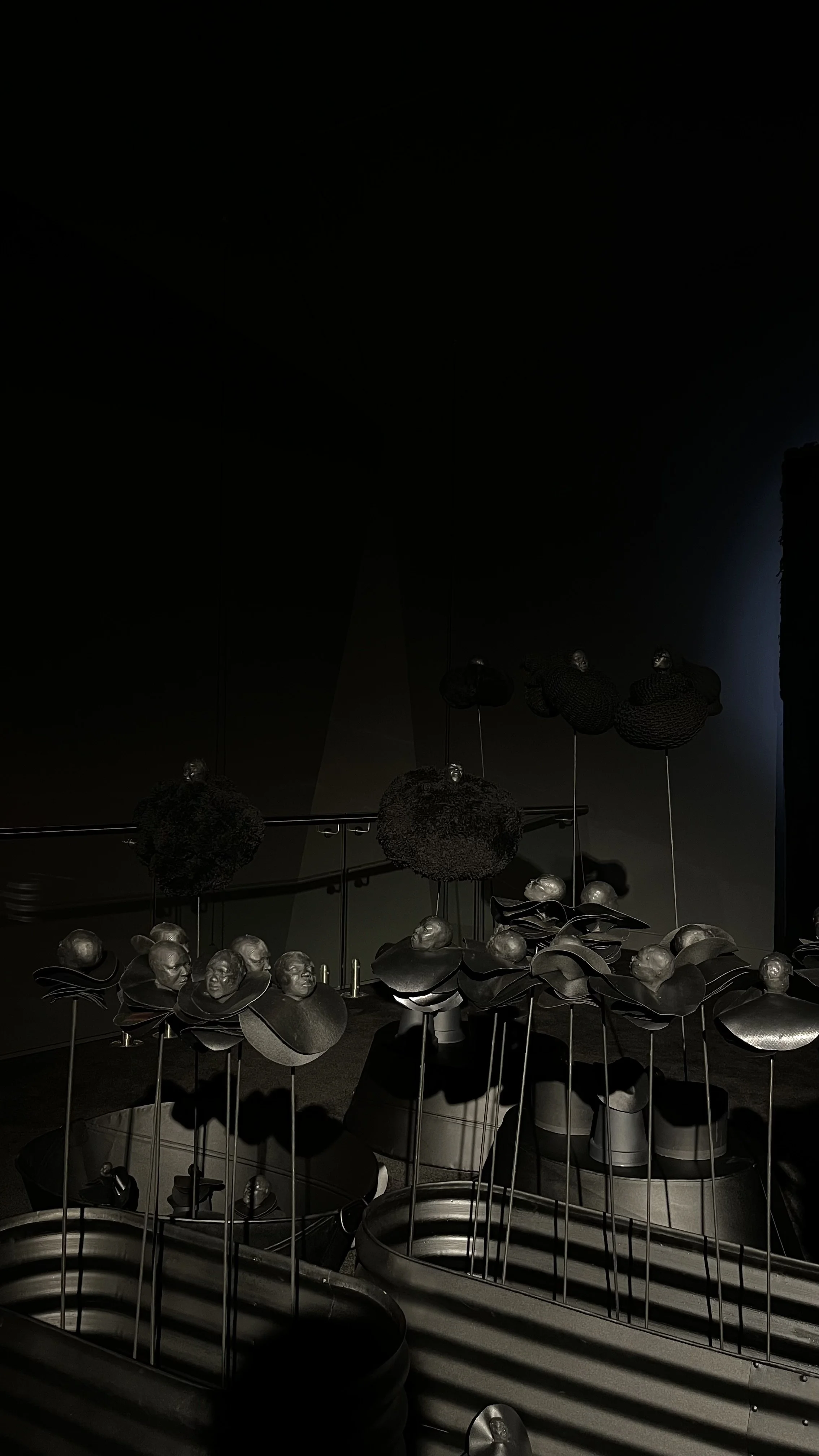
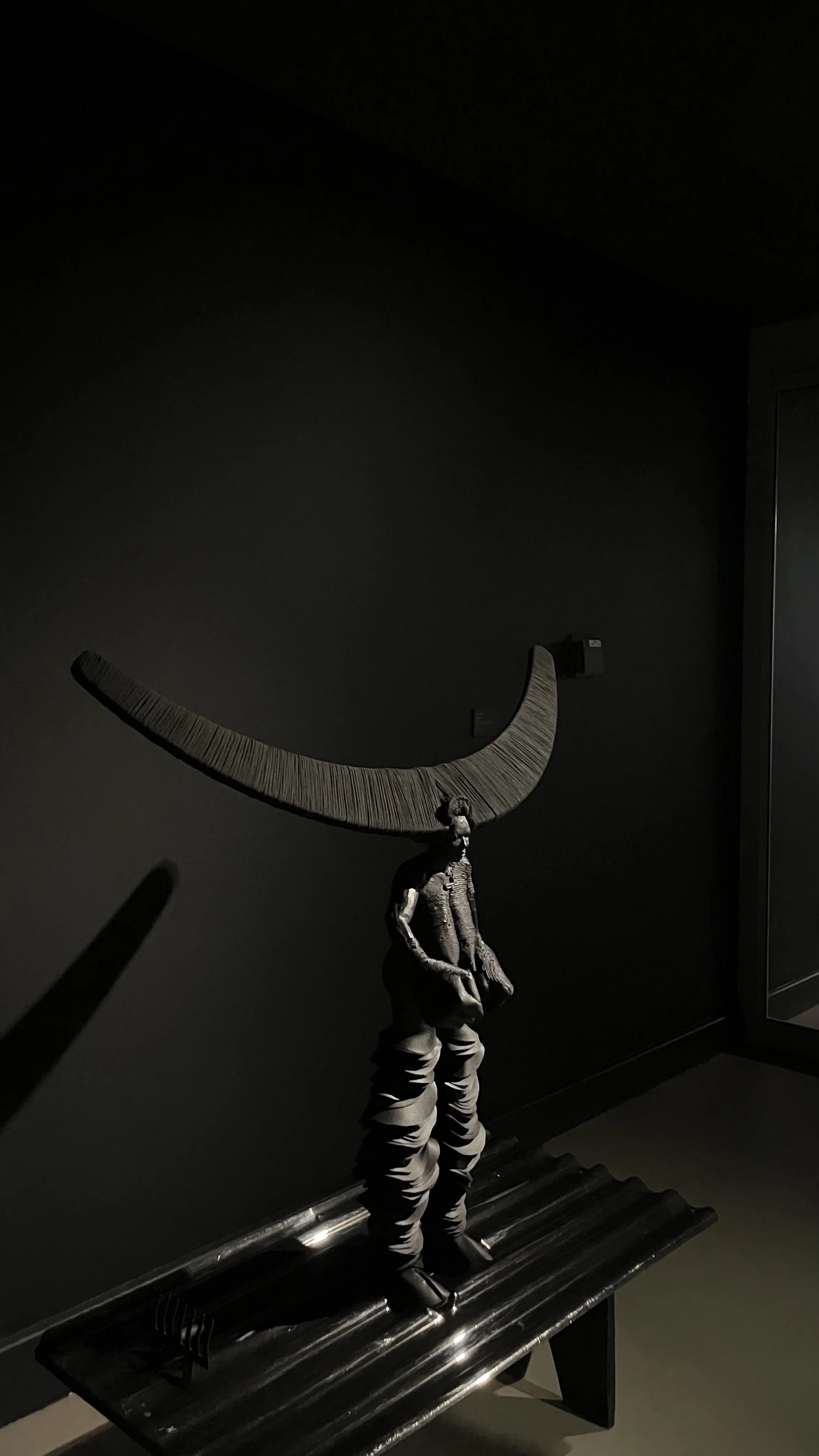
Elsewhere, a quieter moment emerges in the presence of a waskom, a metal bathtub, within which migrating cows appear. This intimate scene carries a sense of movement and displacement, hinting at cycles of migration, labour and transformation. It is both grounded and surreal, a reminder that the boundaries between the domestic, the agricultural, and the spiritual are porous within Mash’s practice.
As viewers move deeper into the space, they encounter an inner sanctum where waskoms and planters gather beneath an aerial vision of tshemong, the field.
This area functions as a sacred site, inviting participation rather than passive observation. Here, the viewer is positioned as the farmer, implicated in acts of cultivation and care. The space becomes one of becoming, where identity is not fixed but continuously formed through interaction with land, memory, and ritual.
Central to ditšwatšhemong is Mash’s self-positioning as a “transdimensional farmer,” a figure who cultivates not only crops but also memory, lineage and speculative futures. Her practice resists linear time, instead operating across temporalities, drawing from ancestral knowledge while projecting forward into imagined worlds where indigenous cosmologies are not erased but expanded. The speculative plants, coded systems and immersive installations that populate the exhibition function as tools for this imagining, blurring the boundaries between art, ritual and environment.
Running through the exhibition is the recurring motif of the grandmother’s garden, a metaphorical site that anchors Mash’s exploration of origin and belonging. This garden is not a fixed location but a spiritual geography, a place of abundance, healing and inherited knowledge. It is both remembered and imagined, existing in fragments across the exhibition’s spaces and gestures. In seeking this garden, Mash invites viewers into a process of searching, one that is as much about self-discovery as it is about collective memory.
ditšwatšhemong ultimately resists singular interpretation. It is at once playful and profound, grounded and speculative, intimate and expansive. Through its layered environments and symbolic language, the exhibition offers a vision of land as a living archive and future possibility, asking what it means to belong not only to a place, but to a lineage of knowledge that continues to grow, transform and endure.